Throughout the month of January, we are honoring Holocaust survivors by amplifying their voices and preserving their stories. In partnership with the Illinois Holocaust Museum & Education Center, each day we highlight one survivor’s journey so future generations can learn, reflect, and remember.

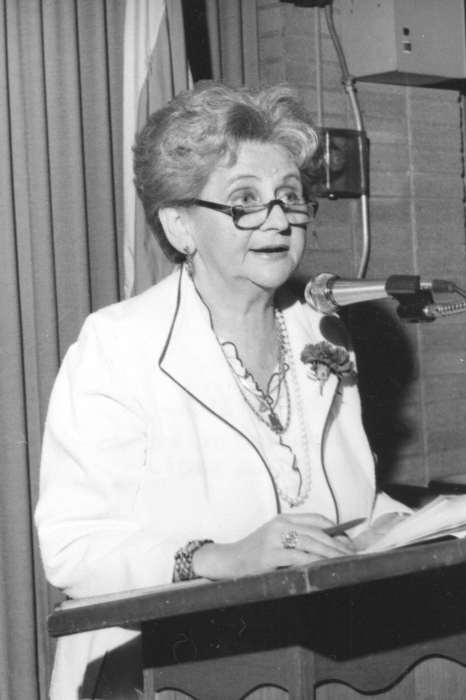
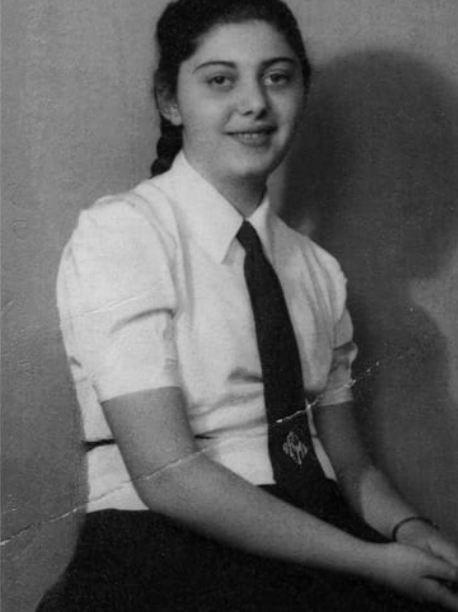
Adele Zaveduk

Adele Zaveduk
“It's been 70 years since this ended, but there are still people that live today that have suffered. And we don’t want the next generation – my grandchildren’s generation – to go through the same thing.”

Her Story:

Adele Zaveduk was born in 1937 in Paris, France. When Adele was just three years old, her father was called up into the French Foreign Legion to serve in Northern Africa. On July 16, 1942, the Germans gave an order to arrest as many Jews as they could in Paris. Adele’s father was arrested and sent to the Velodrome D’Hiver, a bicycle stadium in Paris where Jews were kept for days without food, before being taken to Drancy, a camp in the suburbs of Paris. From Drancy, her father was taken to Auschwitz.

Adele’s mother found a non-Jewish family about 70 miles from Paris in the town of Brou, and took Adele and her sister there. When they arrived, the home was a dilapidated two-room structure with no water or plumbing. Adele recalled: “She shared everything. When there was food, she shared the food.”

After liberation, life stayed fairly normal for Adele and her sister until one day in June, 1945: “We were outside playing… and Madame called us up. There was a man, very skinny, tall man and she said, ‘This man just came back from the war and he is your father and he wants to take you back to Paris with him.’ And we did something we had never done before, we ran away. We had no father, we had no mother. Who is that stranger? He was very, very thin, he looked very sad, and we didn’t want to be with him.”

Adele’s father went back to Paris and said he would be back soon to bring the girls home. After about six weeks, their father came back and took them on a train to Paris where they were placed in an orphanage for 2–3 months because “he had nowhere to keep us.”

Like her father, Adele’s mother also ended up in Auschwitz, and was eventually liberated by the Allied troops and taken to Sweden as part of a prisoner exchange. She was kept in Sweden for about a month while she was brought back to health in a hospital. Once her mother was well enough, she was sent back to France, found the girls’ father and came to the orphanage with him. The girls moved out of the orphanage and back into the apartment that the family had lived in before the war.

Adele’s father passed away in 1951 from a heart attack, and after that event, Adele’s mother moved the family to Argentina where two of her brothers had been living since the end of the First World War. Adele met her husband in Argentina, got married there, and her first son was born there. She moved her family to the United States after a resurgence of antisemitism in Argentina.

Adele served as a Board Member at the Museum and was an active member of the Speakers’ Bureau for over 25 years.

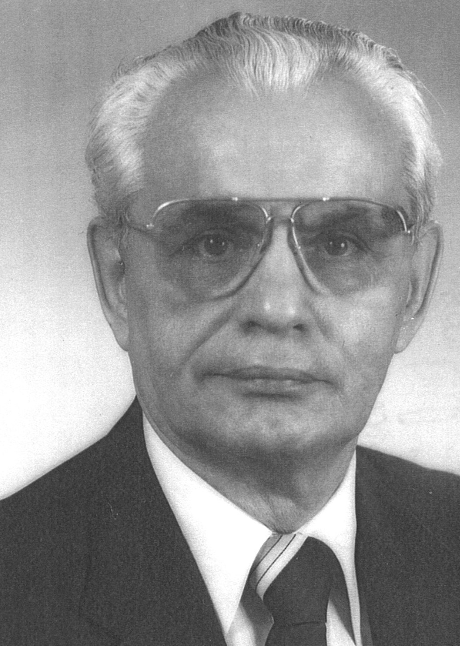
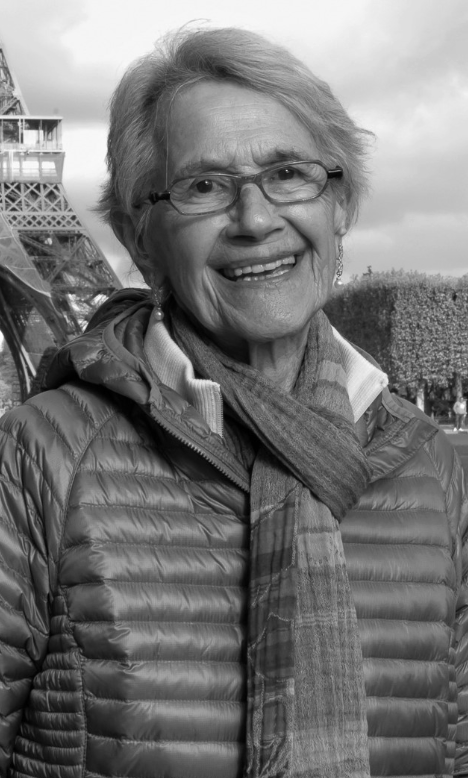
Aron Derman

Aron Derman
“We try to make as much time talking about the Holocaust. Teach what we went through. The main purpose is that it wouldn’t happen again. To remember. We hope that if people be more moral, it doesn’t happen again not only to Jews, but any people in this world.”

His Story:

Aron (né Dereczyński) was born in 1922 in Słonim, a vibrant Jewish town, then in Poland, today in Belarus. He had three sisters: Libi, Feigel, and Edya. At the age of ten, Aron became involved in the Zionist youth movement Hashomer Hatzair. In 1937, he applied to go to Hachshara, an agricultural school in Palestine. As he waited for his immigration certificate, the war broke out.

Under Soviet occupation, Aron went to a Russian technical school to become a movie projector. When the war between the USSR and Nazi Germany broke out in June 1941, he returned to Słonim. On the night of his return, his family home was caught in the battlefield between the Soviets and the Germans, and it was burned to the ground. Shortly after, the Germans established a ghetto. On July 17, German forces entered the ghetto and arrested 1,500 men, Aron and his father among them. While Aron narrowly escaped, his father and the rest of the men were transported to a nearby forest, where they were shot.

The death of his father deeply affected Aron, who resolved to take revenge on the perpetrators. Being young and strong, he received work at collecting Russian arms. He formed connections with others, and together they smuggled arms into the ghetto. Aron and his family survived the deportations in hiding.

In late 1941, Aron met his future wife, Lisa, in the ghetto. What began as a friendship quickly blossomed into a love story. In late June, 1941, the final liquidation of the ghetto took place. Aron watched the ghetto burn from his workplace outside the ghetto. When the action was over, Aron found Lisa and her family who were hiding in the ghetto. He had been working in clearing out valuables from the ghetto. Lisa pretended to be a male salve laborer and escaped with Aron outside. The remaining Jews of Słonim, a mere 800 people out of 20,000 who resided in the ghetto, were put to slave labor. With nowhere else to go, Lisa and Aron returned to the ghetto and joined them.

Aron decided to go to another city with his mother and sisters. He eventually arrived in Grodno, where he knew Lisa and her family were residing. He soon established contact with a Pole by the name of Tomasz Soroka, who offered to provide them with safe passage to Vilnius, free of charge. With the help of Soroka, then only twenty years old, they illegally boarded cargo trains destined for Vilnius, riding on their rooftop in the blistering cold of November. Soroka helped eight people in total to escape in this way.

Their arrival in Vilnius did not secure their safety. Based on their experience in Słonim and Grodno, they knew the danger they were in. Filled with the desire the avenge the death of their loved ones, Aron and Lisa decided to join the partisan resistance. After successfully establishing connection with the underground, they left the Vilnius ghetto as part of a group of 28 Jews. They joined other partisans in the nearby forests of Rudniknaki and Naroch, located 180 kilometers from the ghetto. There, Aron and Lisa participated in military efforts against the retreating German forces. They lost many of their friends.

In the summer of 1944, Aron and Lisa were liberated by the advancing Russian forces. They made their way to the Western Occupation Zone, and from there, to Florence. They married in 1947 in a synagogue in Rome. They then immigrated to the United States under the 1947 Refugee Act, eventually settling in Chicago. They had three sons and eight grandchildren.

In the early 1980s, Aron and Lisa joined the Illinois Holocaust Memorial Foundation (IHMF), an organization whose chief goal was to document Survivor stories, disseminate these stories to the public, and educate against racism, violence, and genocide. They were among its first members. Aron regularly shared his story and was among the first members of IHMF’s Board of Directors.

Audio: Life After the Holocaust

Listen to an oral history interview featuring Aron and Lisa Derman’s story of life after the Holocaust, hosted by the United States Holocaust Memorial Museum:

Listen to “Life After the Holocaust: Aron and Lisa Derman” (USHMM)

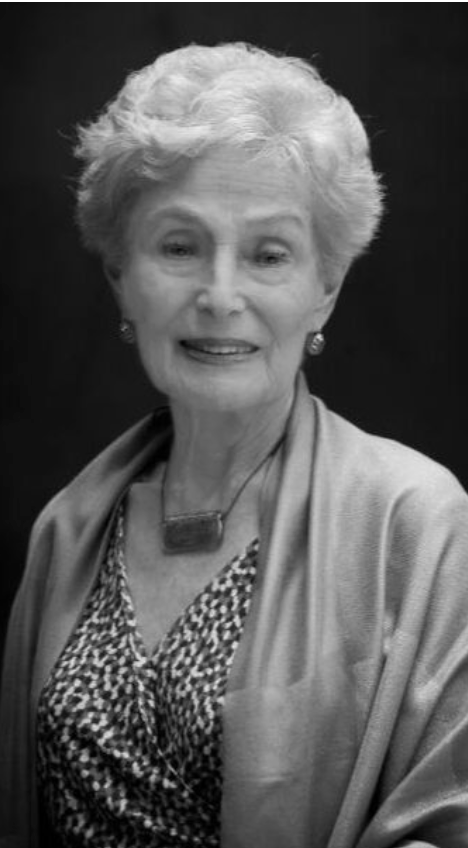
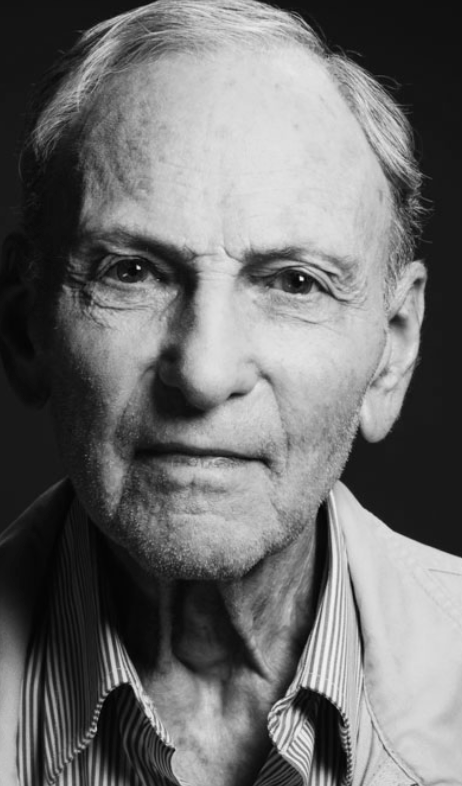
Barbara Steiner

Barbara Steiner
“We must make sure that our children, and our grandchildren, and the future generations will take the lessons from the Holocaust and realize that just with understanding, just with love and compassion, we can build a wonderful place.”

Her Story:

Barbara Steiner was born Bajla Zyskind in Warsaw, Poland in 1925. She lived with her parents and close by her two older brothers, her sister-in-law, and their baby, who was born in 1938. She had a large and vibrant extended family in Warsaw.

Barbara’s father had trained as a rabbi and dedicated his life to learning. He always encouraged his family to do the same, and took extra care of Barbara’s mother, who was frail from a childhood case of typhoid. Barbara adored her parents.

Life in Warsaw changed in 1939 when the Germans occupied Poland. Soon after, Barbara’s entire family was ordered to vacate their apartment with just a few hours’ notice. Food became scarce. Barbara’s oldest brother had to flee the city after someone denounced him to the Germans for trying to build a mill. She never saw him again. Barbara’s parents encouraged her other brother and his family to leave the city after the Germans beat him severely.

Jews in Warsaw were forced to give up their radios and telephones. They were banned from using public transportation and had to wear armbands with blue stars. In 1940, they were forced to build the wall around what would become the Warsaw Ghetto. The Jews were then forced into and unable to leave the ghetto.

Barbara fell sick in the ensuing typhoid epidemic. She prayed to God to live and finally recovered, but by that time, her father was also sick. Barbara tried to find a doctor, but the doctor told her there was no way to save her father. He held her in her arms one last time as he died. Two weeks later, Barbara’s mother also died. Barbara’s brother returned to Warsaw, but under the terrible conditions there, he soon starved. Barbara was then completely alone.

Barbara recalled that the most disturbing part of life in the ghetto was the way the conditions took people’s humanity away. Several times, she had to abandon others to save herself, including her mother and brother. These moments haunted her. But in other instances, Barbara was able to help young people hide with her or find work in the broom factory. She said she could hear her father’s voice urging her when to hide and when to run, and every time she listened to him, he kept her alive.

By 1942, most of the people remaining in the ghetto were in their teens and early 20s. They had learned from some of those who had escaped that Germans were killing people in camps. They began to organize, and Barbara joined Ha-Shomer ha-Tsa’air to help prepare for the Warsaw Ghetto Uprising. She built bunkers, made Molotov cocktails, and trained as a medic.

On April 19, 1943, the Germans brought tanks to the broom factory, but the ghetto residents blew the first tank up and the Germans fled. When they came back, the Germans told them to surrender, but they continued to fight. They killed many German soldiers and hid in the bunkers, sharing food and tending to each other’s wounds, until the beginning of May. Eventually, the Germans began lighting buildings on fire, forcing everyone to flee the bunkers. Barbara was captured and put onto a cattle car. She said proudly of their resistance, “this little Warsaw Ghetto fought much longer than other countries in Europe.”

Without enough food, water, or air, half of the people on the cattle cars died before they reached their destination, Majdanek. When they arrived, the women were gathered in a huge hall and forced to undress. They were either sent to a shower or to the gas chamber. Somehow, Barbara survived, but she could smell the gas chambers and crematoria every single day in the camps. She described Majdanek as “a kind of hell” where they waited for their turn to die.

During the rest of 1943 and 1944, Barbara was moved to a series of work camps in Poland: first Skarzysko-Kamienna, and later, Czestochowa. When she and her friends were separated at Czestochowa, Barbara was so afraid that they would be killed that she started weeping. A young man came over and promised that he would help her survive. He helped her avoid work and brought food for Barbara and her friends every day. Later, when the man and his brother were scheduled for deportation, Barbara demanded her name be put on the list instead, and this action saved their lives. Days later, on January 16, 1945, the camp was liberated.

This man who had helped Barbara survive was Arnold Steiner. They walked out of the camps together with his brother, Joseph, and Arnold proposed to Barbara that very day. They married four days later.

Barbara and Arnold stayed in Czestochowa, where he was from, and re-learned how to be free together. In 1948 they had their son, Martin. Barbara named him after her father, Moshe, who had helped protect her so many times even after he died.

Barbara and Arnold soon decided that they had to leave Poland. In March 1950, they were given visas to move to Israel, but it was very hard for them to find work, and they often went hungry. So, in 1952, they immigrated to the United States and settled in Chicago. They worked several different factory jobs until Barbara was able to get an office job and earn her high school diploma. Though Barbara lost that job when her boss found out she was Jewish, she never stopped working for a better life. In 1962, Barbara and Arnold had their daughter, Muriel.

In 1972, Barbara flew to Germany to testify against several SS guard women who had tortured her in Majdanek. Then, a few years later, when neo-Nazis tried to march in Skokie, Barbara gathered with fellow Survivors to discuss a plan to educate people about what happened in the Holocaust, so they could “counteract hatred with education and understanding.”

This group became the Holocaust Memorial Foundation of Illinois (HMFI), of which Barbara was a founding member and served on the Board of Directors. For many years, she was in charge of recruiting members, whose dues funded the entire organization. Her memories of life in Warsaw helped contribute to exhibitions about the Warsaw Ghetto Uprising. She remained a fundamental part of HMFI and the Museum until she passed away in 2018.

Testimony

Barbara Steiner recorded a full oral history testimony with the USC Shoah Foundation, sharing her experiences before, during, and after the Holocaust.

▶ Watch Barbara Steiner’s Shoah Foundation Testimony

Cipora Katz

Survivor Name
“The Museum reflects one’s past, present, and future. It will teach the young, middle- aged, and elderly, that the Holocaust did happen, and how important it is to prevent future discrimination, hatred, and bigotry, regardless of one’s race or religion. I hope that everyone will learn, that when we say in Hebrew 'Dayenu,' meaning enough or never again, we mean it, in order to prevent future genocides.”

Her Story:

While hiding from the Nazis in a potato silo in occupied Poland from 1942-44, Cipora had her own good luck charm. Her family was forced to separate, and upon parting, her mother wrapped her in a blanket. During her time in hiding, being subjected to cramped quarters and unimaginable living conditions, Cipora looked to her blanket as a friend and comfort. Being 4 years old, Cipora was the only member of her family who could stand in the silo- everyone else was confined to their knees, and at night, they slept like sardines.

Her father died while in hiding, and after liberation by the Russians in 1944, Cipora learned that her mother, sister, grandfather, aunts, uncles, and cousins were killed in the Treblinka concentration camp. After living in Romania and Israel for a time after the war, Cipora moved to the United States in 1955. She has donated her precious blanket to the Museum, which can be seen in the Karkomi Holocaust Exhibition.

Cipora Katz at Loyola Academy

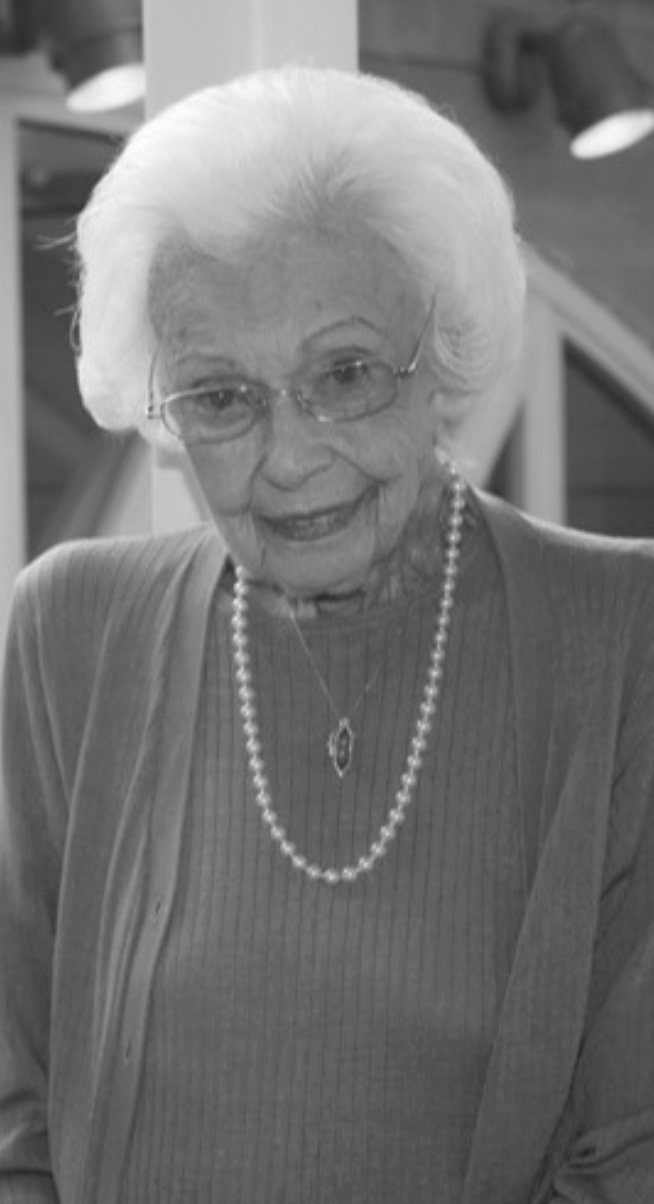
Erna Gans

Erna Gans
“There are six million stories for the six million who were killed. There isn’t enough time in the history of the world to tell all those stories.”

Her Story:

Erna (nee Reicher) Gans was born in Bielsko, a town in western Poland adjacent to the German border, to a German speaking, Jewish assimilated family. When the war broke out in September 1939, Erna was in high school. Locals greeted the Germans with flowers.

The family subsequently moved to Lvov, then on the Russian side of divided Poland. In June 1941, the Germans occupied Lvov. Erna used her knowledge of the German language to avoid deportation. She worked in cleaning homes that belonged to Germans, one of whom hid her, her brother, and her mother during one of the deportation actions.

A few days later, another deportation took place, but this time the rescuer was out of town. Erna’s mother sent her daughter, who did not look Jewish, to roam the streets. When Erna returned, she saw her mother and brother on a lorry. They beckoned her to stay away. This was the last she ever saw of them.

Soon after, Erna’s other brother was taken to the Janowska forced labor camp on the outskirts of Lvov, where he was shot. In November 1941, the Germans forced Erna and her father into the Lvov ghetto.

In winter 1942, Erna’s father paid a German to take her to Cracow and provide her with work and Aryan papers. She joined a group of Jews with fake papers who also worked for this man. Soon after, the group was denounced. By chance, Erna was not present when the Gestapo arrived.

It was Christmas eve, and Erna was lost and alone. She decided to board a train to Zakopane, a Polish resort town in the Tatry mountains. On the train, she conversed with a Polish woman who offered her a room to stay. This woman later denounced her.

In late 1943, Erna was arrested and sent to the Czestochowa labor camp, and from there to Plaszow. She was liberated by the Soviets in January 1945. Erna was the sole survivor of her family.

In 1946, she joined the Bricha organization, which organized illegal immigration to Palestine. However, her attempt to immigrate failed. She eventually arrived in Regensburg, where she met her future husband, Henry.

They married in 1947 and moved to Chicago, where Henry had family. In Chicago, Erna earned an MA in psychology and taught at Loyola University. She had two children.

In 1978, she became the first woman seated as a delegate at the International B’nai Brith convention in New Orleans.

Following the attempted neo-Nazi march in Skokie, Erna became a founding member and the first president of the Holocaust Memorial Foundation of Illinois. She tirelessly advocated for Holocaust commemoration.

Among her many achievements, she pioneered the first project of collecting and recording survivor testimonies from the many survivors who resided in the Chicago area. Erna was always committed to the cause of documenting the stories of survivors.

Survivor Jerry Shane, who immigrated to the United States with Erna on the Marine Tiger, later recalled how she urged him to share his story with the other passengers.

Erna was instrumental for the founding of the first museum on Main Street. She was part of a group of founders who successfully advocated for the Illinois Mandate on Holocaust Education, the first of its kind in the nation, which passed in 1990.

Estelle Glaser Laughlin

Estelle Glaser Laughlin
“Revenge or guilt is not the issue. Responsibility is an obligation, and we are left with a legacy to know and understand, if civilization is to progress. And this wonderful museum reminds us that history always remembers.”

Her Story:

Estelle Wakszlak Laughlin was born in Warsaw, Poland, in 1929 to Michla and Samek Wakszlak. Estelle also had an older sister, Freda, who was born in January 1928. Michla tended to the home and children while Samek ran a jewelry shop. Estelle and Freda attended the local public school.

Germany invaded Poland on September 1, 1939, and the siege on Warsaw began a week after German forces invaded Poland. On September 27, a ceasefire was called, and soon after, German forces entered Warsaw. Estelle and Freda were no longer able to attend the local public school.

In October 1940 German forces decreed the establishment of a ghetto. The Wakszlak family and more than 400,000 Jews from the city and surrounding areas were forced to live in a 1.3 square mile area and to wear a white armband with a blue Star of David.

The food allotments rationed to the ghetto by the German authorities were not sufficient to sustain life; however, Samek was able to get extra food for his family from the black market. From July to September 1942, more than 260,000 ghetto residents were deported to the Treblinka killing center. During this time Estelle and her family hid in a secret room to escape the deportations.

In April 1943, German forces made one last push to deport the remaining 55,000–60,000 Jews from the Warsaw ghetto to forced labor sites or killing centers. Samek, who helped organize the resistance movement, built a bunker in which he and his family could hide during the Warsaw Ghetto Uprising.

As SS and police units began roundups, resistance fighters met them with artillery fire. In retaliation, the SS began razing the ghetto, block by block. The bunker where Estelle and her family were hiding, which was in the basement of a house, was exposed by a bomb.

The Germans dragged the Wakszlak family out onto the street, marched them to a central gathering point, forced them to board freight train cars, and transported them to the Lublin-Majdanek concentration camp.

Upon arrival at Majdanek, the SS separated the women and men. Estelle, Michla, and Freda were chosen for forced labor, but Samek was murdered in the gas chamber. The women moved soil from one place outside the camp to another.

At one point, Freda was badly beaten by a German guard and could not work. She hid in the barracks, but was discovered. The Germans put her name on what she suspected was a gas chamber list.

To stay together, even if it meant they would die, Estelle and Michla switched places with two women who were on the same list. Michla, Estelle, and Freda were instead sent to the Skarżysko concentration camp to work in a munitions factory, and were later transferred to another weapons factory at the Czestochowa concentration camp.

Soviet forces liberated Czestochowa in January of 1945. To escape pogroms in Poland, the three women moved to Allied-occupied Germany in August 1945 and lived there until 1947, when they moved to the United States to join Michla’s two sisters and brother in New York City.

Survivor Talk

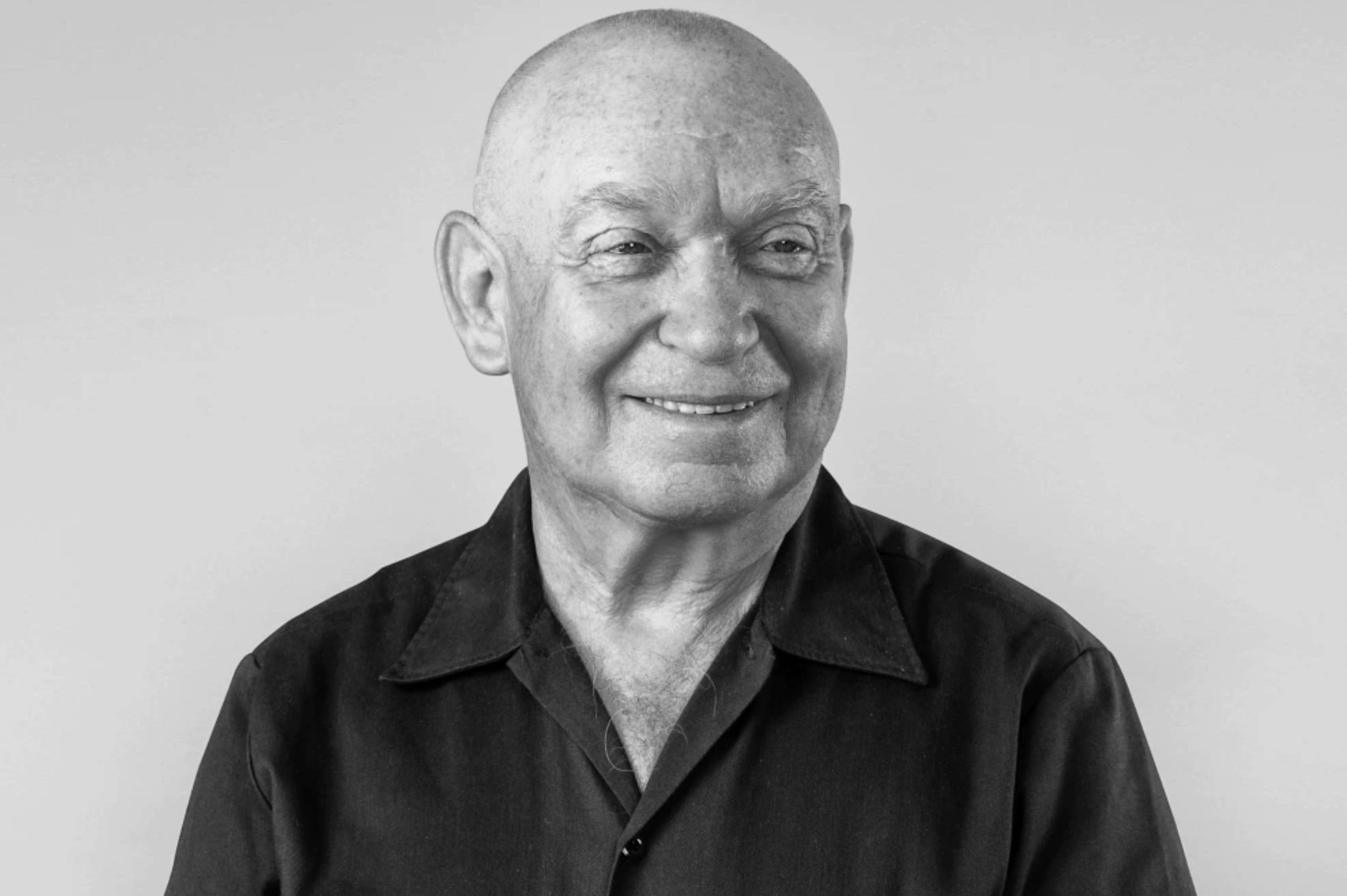
John Krawiec

John Krawiec
“It is good for the younger generations to learn, because that – it has some influence on stopping it again.”

His Story:

John Krawiec was born in Bircza, Poland. In September 1939, John was an infantry officer when the Nazis invaded Poland. Not wanting to be caught as a POW, John snuck from the front lines to the home of a local Polish farmer, disposed of his uniform, changed into civilian clothing, and walked over 60 miles to his parents’ home.

Shortly thereafter, John joined the underground movement that was assisting the Polish government in exile in Paris. In the spring of 1940, John began publishing an underground bulletin about the news of the war. Each week he would move the printing presses to avoid being discovered. John worked with a local pastor who obtained permission to have a radio. The pastor would listen to the Polish government program from Paris (and later from London) and pass the information along to John to print. John’s sister, brother, brother-in-law, and other friends helped distribute the bulletin.

In September 1940, John discovered that an informant for the Gestapo had infiltrated the underground network and was spying on him. After a trip to Krakow, John returned home to discover the Gestapo had come to his parents’ house to arrest him. Not wanting to live in fear for their lives, John’s parents kicked him out of their home. John returned to the underground and was provided with false papers and an alias.

In 1943, John was to report to special underground training to become acquainted with new weapons and then join the partisan effort. However, on May 22, 1943, on his way to the training, John stopped in Yiroslav to visit a friend. At the train station, John was arrested by the Gestapo in a case of mistaken identity—he looked similar to a Polish underground man who had shot the Second in Command of the local Gestapo. John was tortured and imprisoned for 10 weeks under suspicion of underground activity.

John was sent to Tarnoff concentration camp before being transported to Auschwitz-Birkenau and eventually to Buchenwald, where he worked as a gardener transporting manure from the local sewers. By early 1944, John began receiving packages with food from his family. He credits his survival to this food. However, as the Allies approached, the parcels stopped coming and Buchenwald was bombed by the Americans.

In September 1944, John was transferred to a subcamp of Buchenwald. Seven months later, he was sent on a march to Buchenwald. He briefly escaped from the march, was recaptured, and was placed in a camp with Soviet POWs before being liberated by the U.S. Army.

John immigrated to the United States in 1949. He graduated from Loyola University Chicago in 1963 with a degree in Political Science, focusing on Russian Foreign Policy. After years of working in factories, John became a journalist and eventually spent 18 years as the editor-in-chief of the Polish Daily Zgoda, the largest Polish daily newspaper in Chicago.

Lisl Bogart

Lisl Bogart
“It’s important to me that I’m talking to the new generation about what hatred and prejudice can do. Because we don’t want this ever, ever happening, ever again.”

Her Story:

Lisl was born in 1926 in Prague, Czechoslovakia. Lisl came from an upper-middle-class Jewish family. Her father was a businessman who owned a wholesale store for floor coverings and automobile upholstery, and her mother was a homemaker. The extended family was also very tight-knit, and they would frequently celebrate Jewish holidays together in the Bogart home.

Early in life, and before the German invasion of Czechoslovakia, Lisl did not experience antisemitism. Lisl only started to become aware of how dangerous the situation was becoming when her family stopped traveling outside of Czechoslovakia out of fear for their safety. By 1938, there was visible unrest in Prague. Lisl watched as children who were part of the Hitler Youth marched on the streets and shouted antisemitic slogans.

By the time the Germans had annexed the Sudetenland, the family knew Prague was no longer a safe place. Lisl’s parents tried to find a way out of Czechoslovakia, but all their plans fell through. On March 15, 1939, Prague became officially occupied by the Germans, and Jews were forbidden from traveling. The family was stuck in Prague.

Word soon spread that the Nazis were preparing transports. Lisl and her family, along with the rest of the Jewish people in her neighborhood, packed and prepared what goods they had. In June of 1942, Lisl and her family were transported to Theresienstadt concentration camp.

In the camp, there was little to no food provided. If a slice of bread was handed out, it would have to sustain a person for an 8 to 14-hour workday. Those who were not able to work were taken and shot by the SS. Lisl worked multiple jobs while in the camp, including building railroad tracks and farming.

At one point, the Red Cross had visited Theresienstadt to check on the conditions of the camp. Lisl and the other prisoners were forced to act like Theresienstadt was a model village. Fake storefronts, bakeries, and medical clinics were built to make the camp seem like an actual village. The SS had even printed out fake money to further try and make the environment seem normal.

One day, a notice came that 5,000 Czechoslovakian Jews would be sent to Auschwitz. Lisl and her family were ordered onto this transport. However, as Lisl was getting into the cattle cart, Lisl was pushed off the cart ramp. The train doors were then ordered shut. Lisl, not knowing what to do, returned to her barrack alone. Lisl’s parents and brother were taken to Auschwitz, and unfortunately, she would never see them again.

Now alone in the camp, Lisl and other young women were tasked with carrying out the dead bodies of arriving trains. At one point, Lisl also contracted typhoid. When the Russian army finally liberated the camp on May 7, 1945, Lisl was still in the typhoid barrack, unconscious from the disease.

After a few weeks, Lisl regained her strength. She returned to Prague, hoping her family members would also return. However, none of them ever did. With no one in Prague, Lisl decided to immigrate to America, where she had an uncle. The paperwork took over a year, but Lisl eventually made her way to New York. There she met her husband, Henry. The two married in July of 1946 and had two daughters.

Video: Survivor Talk

Magda Brown

Magda Brown
“Protect your freedom. Think before you hate. Stand up to the deniers.”

Her Story:

Magda (Perlstein) Brown was born in 1927, in Miskolc, Hungary. In March 1944, Germany invaded Hungary, first establishing a ghetto. On Magda’s 17th birthday, she was deported to Auschwitz-Birkenau with her family on one of the final transports. Her parents and much of her extended family died in the gas chambers. Her brother was the only family member to survive.

In August of 1944, Magda was deported to Münchmühle, in Stadtallendorf, Germany, where she worked at the site of one of Germany’s largest munitions factory. She was one of the one thousand Jewish Hungarian women from Birkenau chosen for this job.

In March 1945, she was sent on a death march to Buchenwald concentration camp. Magda and several prisoners were able to escape, hiding in a nearby barn. She was eventually liberated by the Sixth Armored Division of the U.S. Army.

After the war, Magda made contact with relatives in the United States, who sponsored her immigration to Chicago in September 1946. For forty years, Magda worked in a physician’s office as a Certified Medical Assistant. She was a beloved wife, mother, and cherished grandmother of many.

Although it was painful to remember her horrendous experiences, Magda believed her story, as well as others, must be told. In October 2018, Magda was scheduled to speak at Chatham University in Pittsburgh, Pennsylvania. The tragic shooting at the Tree of Life synagogue took place the day before, but she didn’t hesitate to board the plane, saying, “Now the world needs to hear the message even more. Let’s go.”

In one of her final interviews, Magda noted, “I will continue to tell my story. I’ll tell my story until the good Lord wants me in his corner.”

Magda Brown was 17 years old when she was deported to Auschwitz-Birkenau on one of the final transports to Auschwitz along with her entire family. In August of 1944, she was deported to Munchmuhle, Stadt Allendorf, Germany, where she worked in an ammunition factory that produced bombs and rockets. She was one of only 1,000 prisoners from Birkenau chosen for this job.

In March 1945, she was sent on a death march from the factory for three days and was eventually liberated in a nearby forest by the Sixth Armored Division of the US Army. Magda came to America in 1946 and arrived in Chicago in 1960. Sadly, Magda Brown recently passed on July 7, 2020.

This was originally recorded on the Museum's Facebook page on April 1, 2020, as part of our Coffee with a Survivor series.

Video: Coffee with a Survivor

Marion Deichmann

Marion Deichmann
“The only thing I did remember was we were in danger. We were hunted like animals – wild animals – and our life was in danger but you can’t really have a conception of death when you are seven.“

Her Story:

Holocaust Survivor Marion Deichmann was born in Karlsrühe, Germany in November 1932, to Kurt and Alice Deichmann, just months before Hitler’s appointment as Chancellor on Jan. 30, 1933. They were a middle-class German Jewish family who could not imagine that all of continental Europe would capitulate and be occupied by the Nazis. When her father lost his job in 1934, the family moved to Luxembourg. Eventually, her mother and father would separate, and Marion’s father would flee Europe with his parents and escape to Brazil. Marion and her mother remained in Luxembourg, and by the time her mother decided that emigration might be necessary, it was too late to leave Europe.

Marion and her mother fled Luxembourg and managed to get to Brussels, where they found a truck driver to sneak them across the border into France, eventually joining Alice’s mother in Paris. When Marion was 9 years old, her mother was arrested in the Vel d’Hiv roundups, the mass arrests of Jews in Paris in July 1942. Alice was sent first to Drancy and then to Auschwitz-Birkenau. Marion never saw her again.

After her mother’s arrest, the French Resistance came to relocate Marion and what remained of her family. Marion was moved around, staying in homes with different families until a social worker connected Marion with the Parigny family in Normandy. Marion was treated well by the Parignys and felt like one of the family. When D-Day arrived, the family temporarily hid in the countryside to avoid the worst of the fighting and bombing. The Parigny family’s home and the café they owned were destroyed along with much of their village.

Once the war ended in France months later, Marion returned to Paris and reunited with her grandmother and uncle but learned that her mother had been murdered in Auschwitz. In 1947, the family immigrated to New York. Marion lived in the United States for many years, marrying and having children before returning to France. She stayed in contact with the Parigny family and still does to this day. In 2015, the Parigny family was recognized as Righteous Among the Nations by Yad Vashem.

Marion returned to the United States in 2019 to be closer to her children and now lives in Chicago. Her book, Her Name Shall Remain Unforgotten, is dedicated to her mother and is available in English, French, and German.

Marion’s virtual reality film, Letters from Drancy, can be seen in the Museum’s virtual reality gallery, The Journey Back: A VR Experience.

Video: Coffee with a Survivor

Matus Stolov

Matus Stolov
“I learned from myself and maybe from my mother that in order to survive… in order to go to the better life you have to do something… you have to be responsible for doing something better for your life yourself.”

His Story:

Matus Stolov was born in Minsk, Belarussia, in 1928. He was the son of Polish Jewish parents who had fled to Russia after the 1917 revolution to build a socialist utopia. He had one older brother, Boris.

In 1936, Matus’ father died of natural causes. Under Soviet laws, all expressions of Jewish life ended in 1934, so Matus received no religious education growing up.

In 1941, Germany invaded Minsk, and a ghetto was built around the Jewish section of the city. Boris was able to escape, but Matus and his mother were forced to live with another family. Routine actions took place in the ghetto where Jews were taken out and shot in mass executions. Matus and his mother survived this by hiding with the help of a Christian friend named “Big” Yelena.

In 1942, “Big” Yelena arranged for Matus and his mother to be smuggled out of the ghetto by partisans. In 1942, they crossed the front lines and settled in Kazan. They were liberated in June 1945 and returned to Minsk.

After liberation, Matus and his mother received a notice that Boris had been killed in combat while serving in the Red Army. After the war, Matus finished University, where he was studying to become a mechanical engineer.

In 1952, he married Victoria, a woman from Minsk he had known since grade school. In the early 1980s, Matus was able to immigrate to the United States after ten years of trying to leave the Soviet Union. The Stolov family arrived in Chicago in April 1982, on the second day of Passover, and celebrated their first Seder. Matus and Victoria had one daughter.

Sami Steigmann

Sami Steigmann
“I am not what happened to me, I am what I choose to be.” — Sami Steigmann

His Story

Sami Steigmann was born on December 21, 1939, in Czernovitz, Bukovina, then part of Romania. When he was a toddler in 1941, his family was deported by Romanian authorities to the Mogilev-Podolsky labor camp in Transnistria, Ukraine, where they remained until 1944. Life in the camp was brutal. Bitter winters, starvation, and disease threatened their survival every day. Because Sami was too young to work, he was subjected to Nazi medical experiments. Although he has no memory of the procedures, he suffered severe neck, head, and back pain throughout his life as a result.

Daily life in the camp continued to be harsh and unforgiving. Food was scarce, and Sami’s father once gave up his winter coat in exchange for a loaf of bread in an effort to keep the family alive. At one point, Sami was close to death from starvation, but a German woman living near the camp bravely risked her life to secretly bring him milk—an act of compassion that helped save him. The camp was liberated by the Red Army in 1944.

After liberation, Sami and his family returned to Romania and later settled in Reghin, Transylvania. Adjusting to life after the war was difficult, and Sami did not initially know the language. Years later, when the Soviets allowed some Jews to return to their places of origin, his father chose to return to Romania. Sami’s family history also held an extraordinary connection: his paternal grandmother was a first cousin of Carlo Schanzer, Italy’s Foreign Minister in 1922.

In 1961, Sami and his family immigrated to Israel, where he served in the Israeli Air Force. In 1968, he emigrated alone to the United States with no money and without knowing English. He lived in Milwaukee, Wisconsin, where he married and later divorced. In 1983, he returned to Israel, but in 1988 he moved back to the United States and eventually made New York City his permanent home.

In 2002, Sami applied to the Claims Conference Compensation Program, explaining that although he did not remember the experiments, his parents told him what had happened and he had suffered lifelong pain. Two years later, in 2004, he received official confirmation recognizing him as a victim of Nazi medical experimentation. The symbolic payment mattered far less than the written acknowledgment that what he endured was real.

For many years, Sami struggled with recurring nightmares and feelings of not belonging. He was too young to share the full experiences of older survivors, yet too deeply affected to feel part of the next generation. In 2003, at a gathering at the Holocaust Museum in Washington, D.C., attended by more than 8,000 survivors, their families, and liberators, Sami met someone born in the same city, in the same camp, during the same years. For the first time, he felt understood. He calls that moment bashert — meant to be.

Sami chose not to live as a victim but as a survivor. He devoted his life to sharing his story, inspiring young people, and teaching lessons about resilience, compassion, courage, and moral responsibility. On February 17, 2016, he was honored with the Harmony Power Award at the Museum of Tolerance in New York City and received a proclamation from the New York State Assembly recognizing his courage and dedication to Holocaust education.

Survivor Talks